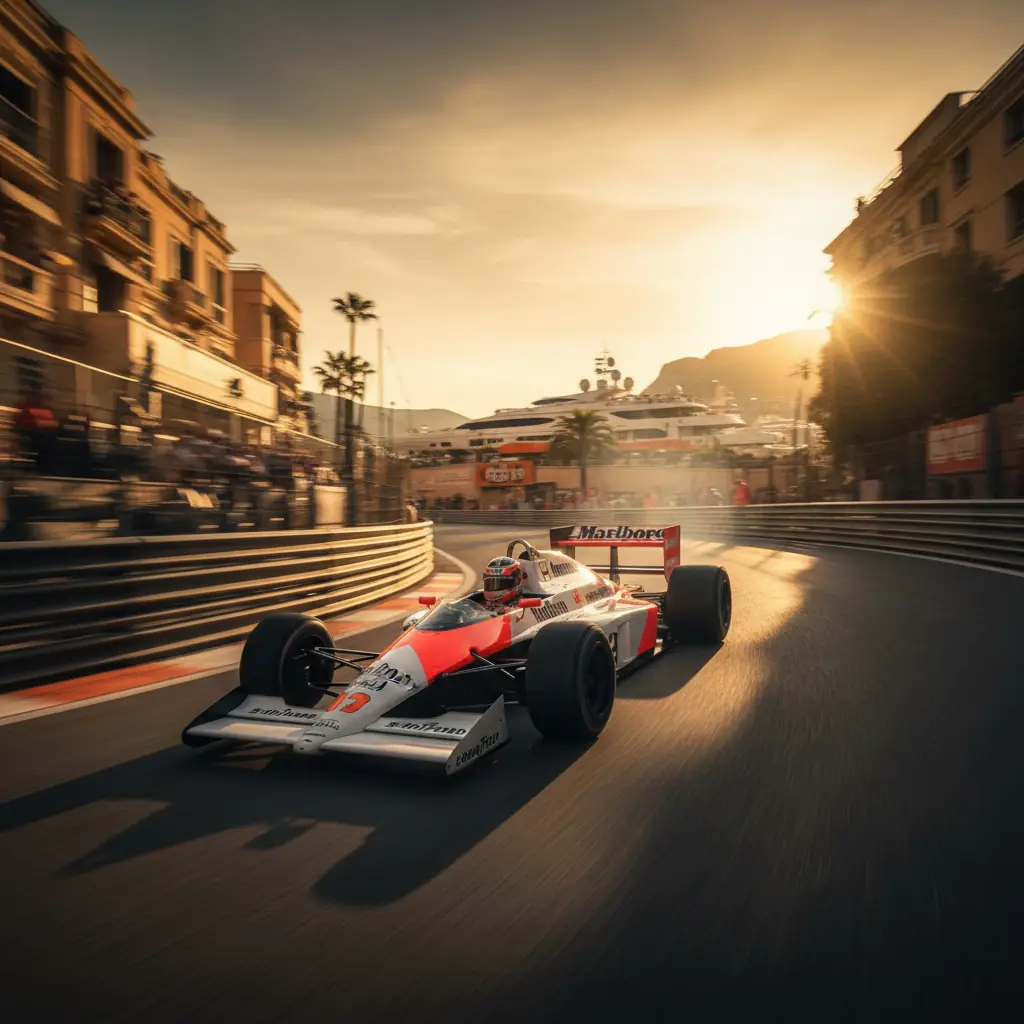
The Monaco Grand Prix: a jewel in the crown of Formula 1, shimmering with an unparalleled blend of glamour, history, and daredevil racing. Nestled within the tight, twisting streets of Monte Carlo, this iconic circuit presents a unique and formidable challenge to drivers and engineers alike. The allure of Monaco transcends mere motorsport; it’s a spectacle where precision meets bravery, and where legends are forged in the heat of competition.
Central to the mystique of the Monaco Grand Prix are its lap records – tangible markers of speed, skill, and technological advancement. These records are not just numbers; they are stories etched into the asphalt, reflecting the evolution of F1 cars and the relentless pursuit of perfection. The lap records encapsulates decades of motorsport innovation, capturing the essence of fleeting moments of unbelievable performance.
This article is dedicated to the enthralling journey through the history of Monaco Grand Prix lap records, diving deep into the thrilling world of motorsport. Our goal is to provide expert insights and a clear, concise, and valuable understanding of how these records have evolved alongside the sport itself. Buckle up, as we explore the historic laps that define the Monaco Grand Prix.
The Unique Challenge of Monaco
The Monaco circuit stands apart in the Formula 1 calendar, a beast unlike any other. It’s not just a race; it’s a high-speed ballet on the edge of disaster. Forget the sprawling run-off areas you see at modern tracks; here, the barriers are your constant companion. One tiny mistake, a fraction of a second’s hesitation, and you’re intimately acquainted with the unforgiving metal. The thrill isn’t just about speed; it’s about precision, about threading the needle at almost 200 mph.
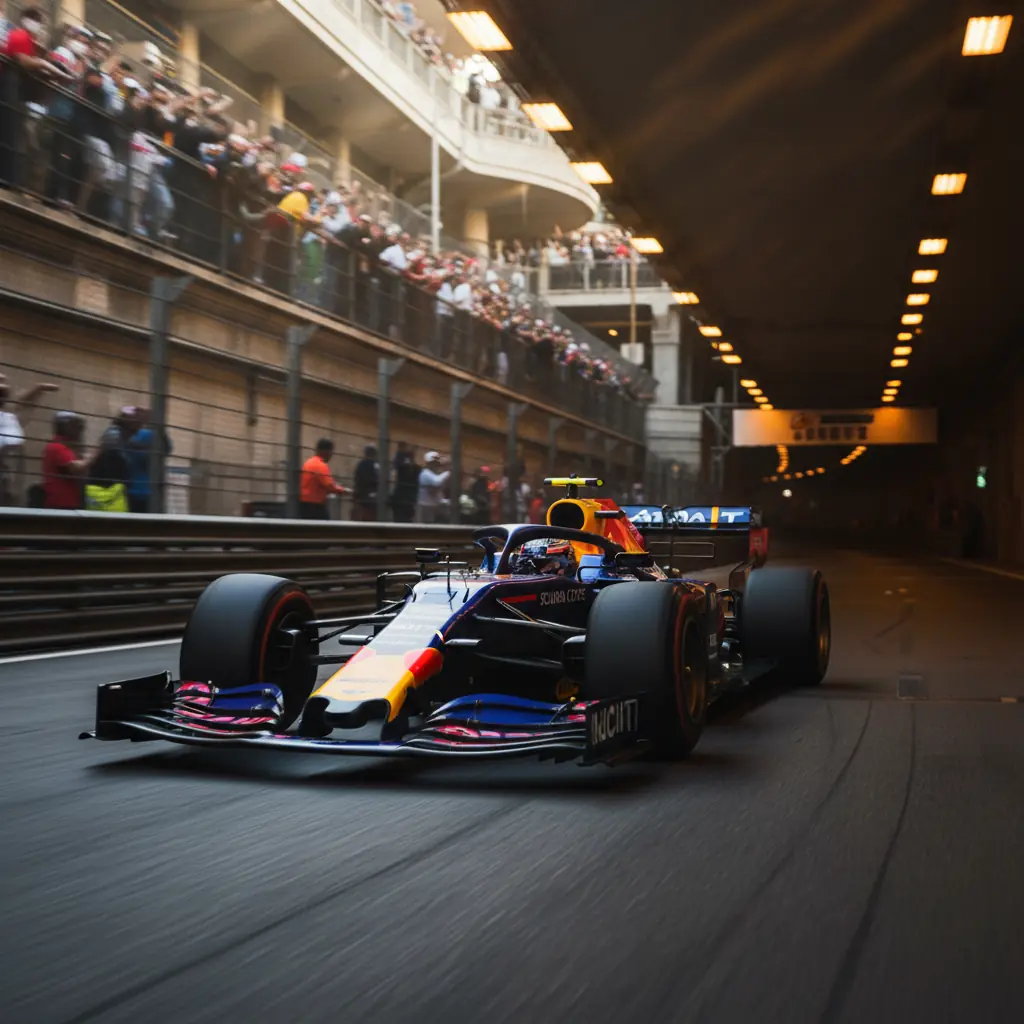
I remember watching a race a few years back, riveted as a driver clipped the barrier coming out of Casino Square. It wasn’t a major crash, but enough to unsettle the car and ruin his race. Monaco demands respect; it punishes even the slightest overconfidence. Think about the iconic corners – Casino Square, where a gentle lift is all that separates glory and gravel; the Grand Hotel Hairpin, the slowest and tightest corner in F1; and the blind tunnel, a flat-out blast into the unknown. Qualifying is crucial; overtaking is notoriously difficult, making Saturday’s performance almost as important as the race itself. Here the margin for error is practically nonexistent, and driving skill trumps virtually everything.
Technical Demands
The configuration of Monaco places unique technical demands on the F1 cars. Forget about outright power; downforce is king. Teams run maximum downforce setups to glue the cars to the tarmac, allowing drivers to attack those tight corners with confidence. Suspension is critical too; it needs to be compliant enough to handle the bumps and undulations of the street surface, but stiff enough to maintain stability under heavy braking and cornering loads. A perfectly tuned car is essential to be in contention, and a minor miscalculation can spell catastrophe.
Evolution of the Monaco Circuit
The Monaco circuit, a jewel in the Formula 1 crown, hasn’t remained static through its illustrious history. Its layout has undergone several transformations, each leaving its mark on lap times, racing strategy, and the overall spectacle. These changes, often driven by the relentless pursuit of safety and the evolving demands of motorsport, have shaped the unique character of this iconic track.
The early Monaco circuits were a raw test of skill, courage, and machine. Over the years, the circuit saw several modifications, with key areas like the chicane and the Swimming Pool section undergoing significant alterations. These changes happened for different reasons, and most of them focused on safety and reduction of overall speed in certain corners.
The impact of these adjustments on lap times is undeniable. Specific lap time comparison is tough, because with every modification there are a lot more variables to consider – car technology, tire compounds and weather conditions. Each alteration has contributed to the ongoing narrative of the Monaco Grand Prix, influencing not only the stopwatch but also the very essence of racing on this legendary street circuit. What remains constant, however, is the challenge and the prestige associated with mastering the Circuit de Monaco.
Safety Regulations
A critical driving force of the Monaco circuit’s evolution has been the ever-tightening grip of safety regulations, primarily enforced by the FIA. The original layout was incredibly dangerous and unforgiving by today’s standards. The necessity for driver’s health and safety came a long way, which forced the administrators to do a few changes. This involved reprofiling corners, widening run-off areas, and adding or modifying barriers to mitigate the consequences of high-speed incidents. These changes, while sometimes impacting the circuit’s flow, have drastically improved safety standards, making the Monaco Grand Prix safer for drivers while preserving its unique character.
Key Eras and Lap Record Progression (1950s-Present)
The Monaco Grand Prix, a jewel in the Formula 1 crown, isn’t just about glamour and prestige; it’s a high-speed chess match where tenths of a second separate glory from anonymity. The story of its lap records is a fascinating chronicle of automotive evolution, driver skill, and daring strategy. Let’s dive into Monaco’s thrilling history of lap record progression.
1950s to 1970s
In the formative years of Formula 1, the Monaco circuit was a different beast than the one we recognize today. The 1950s witnessed legends like Juan Manuel Fangio wrestling their Alfa Romeos around the tight corners. Cars were simpler, raw, and demanded immense driver skill. Lap records were significantly higher, a testament to the less refined technology. As the sport progressed into the 1960s, rear-engine cars began to dominate, heralding a new era of speed and agility. Lotus, with its innovative designs, led the charge. The 1970s saw further advancements in aerodynamics and engine power. The lap times continued to drop, with drivers like Jochen Rindt setting blistering paces. In 1970, Jochen Rindt, piloting the revolutionary Lotus 72, set a new benchmark with a lap time of 1:23.2. These early decades established the foundation of Monaco’s racing legacy.
1980s to present time
The 1980s marked a turning point with the arrival of turbo engines and groundbreaking aerodynamics. Downforce became a crucial factor, allowing cars to corner at speeds previously unimaginable. This era was dominated by the rivalry between Alain Prost and Ayrton Senna. Senna, in particular, showcased exceptional skill at Monaco, earning him the title “King of Monaco.” Each year the lap records were broken. Then the evolution of technology, driver skill and of course, the power of Mercedes made the lap times drop like never before. The cars are super fast and the drivers extremely skilled. The lap records are being redefined with each Grand Prix, adding new chapters to Monaco’s rich and ongoing racing story.
Technology’s Impact on Lap Times
Monaco, a track steeped in history and prestige, has witnessed a dramatic evolution in lap times, thanks to relentless technological advancements in Formula 1. The pursuit of speed has driven innovation across various domains, each contributing to shaving precious seconds off lap records.
Engine Development: The heart of any F1 car, the engine, has undergone a metamorphosis. From the raw power of naturally aspirated engines to the forced induction of turbochargers and the sophisticated hybrid systems of today, each generation has brought a surge in horsepower. Turbochargers provided a significant boost in power, while modern hybrid systems add another layer of complexity and efficiency, harnessing energy during braking and deploying it for strategic acceleration, all leading to faster corner exits and straight-line speed.
Aerodynamics: The manipulation of airflow has become an art form in F1. Early wings were rudimentary, but engineers quickly learned to generate downforce, sticking the cars to the track. The ground effect era saw cars virtually glued to the asphalt. Today’s complex wings, bargeboards, and diffusers work in harmony to manage airflow around the car, creating downforce without excessive drag, allowing for incredible cornering speeds at Monaco’s tight turns.
Tire Technology: Tires are the crucial contact point between the car and the road. The introduction of slick tires maximized grip, while the ongoing development of tire compounds offers teams a spectrum of choices, balancing grip and durability. These advancements allow drivers to push harder for longer, extracting maximum performance from their machines.
Suspension Systems: Advanced suspension systems play a huge role in optimizing car handling and stability. These systems allow for fine-tuning the car’s response to bumps, curbs, and changes in direction, maintaining optimal tire contact and maximizing grip, which is essential for navigating the challenging Monaco circuit with precision.
Collectively, these technological leaps have transformed F1 cars into incredibly sophisticated machines, capable of achieving lap times that were once unimaginable. Each innovation has played a role in rewriting the record books at the iconic Monaco circuit, pushing the boundaries of what is possible.
Driver Skill and the Monaco Factor
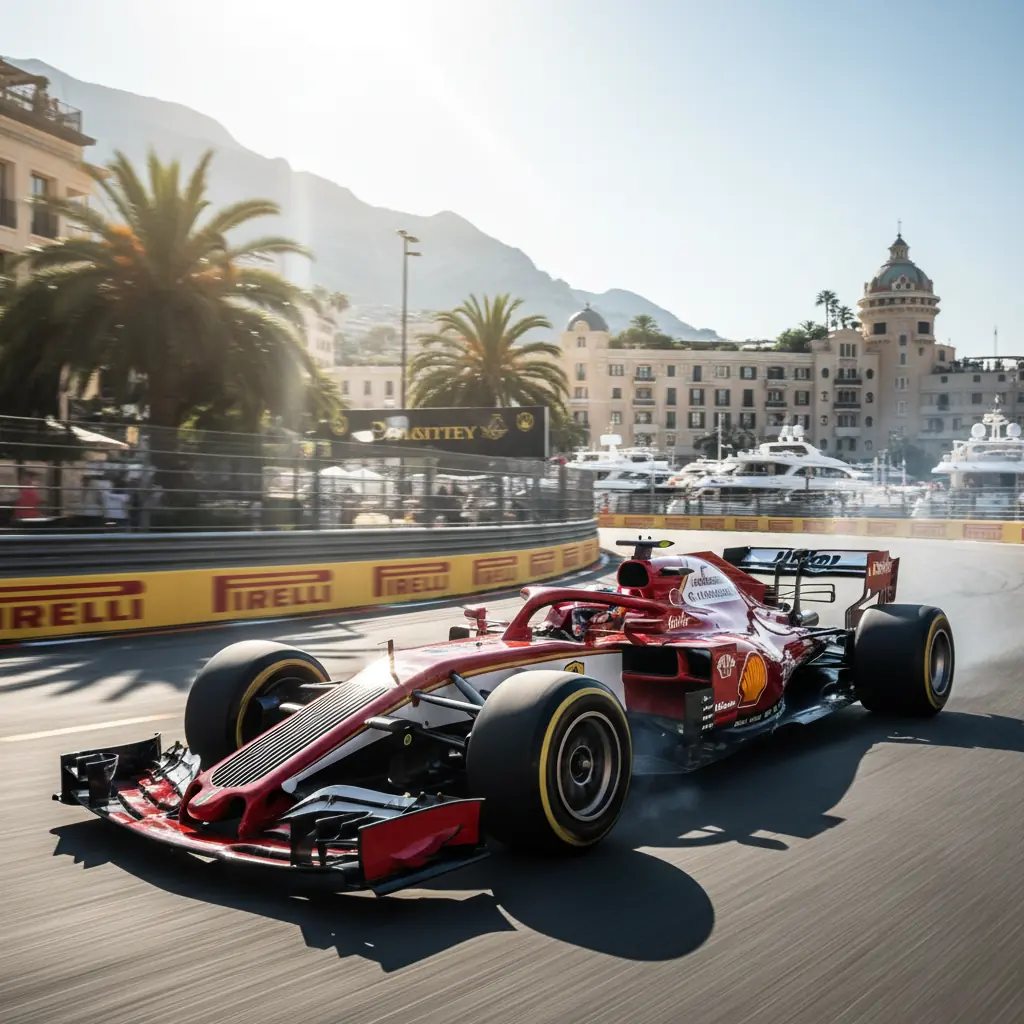
Monaco isn’t just another race on the Formula 1 calendar; it’s a crucible where driver skill is put under an extreme, almost unbearable, spotlight. The narrow streets, unforgiving barriers, and complete absence of runoff areas mean that raw speed alone is worthless. At Monaco, the “Monaco factor” elevates drivers who possess a rare blend of precision, bravery, and exceptional car control.
To conquer Monaco, drivers need an almost preternatural sense of spatial awareness. They must be able to place their car within millimeters of the barriers, threading the needle through iconic corners like Casino Square, Mirabeau, and Rascasse. Braking needs to be absolutely perfect, scrubbing off speed at the very last moment without locking up the wheels. This requires not just raw talent, but thousands of hours of training and simulations to develop the necessary muscle memory and reaction time.
Confidence is also paramount. Drivers must have unwavering belief in their abilities, being able to attack each corner knowing that the slightest mistake can have devastating consequences. It’s a mental game as much as a physical one, demanding intense concentration and the ability to block out the immense pressure. The bravery to push the limits lap after lap, even when the car is dancing on the edge of control, is what separates the good from the great at Monaco.
History is filled with drivers whose unique skillset made them masters of Monaco. Ayrton Senna, with his almost mystical connection to the car, secured six victories on the track, demonstrating unmatched car control. Michael Schumacher, known for his relentless pursuit of perfection, also excelled, showcasing the importance of driving technique. These champions weren’t simply fast; they possessed the specific skills and mental fortitude needed to tame the unique challenges of the Monaco circuit. Their performances serve as enduring testaments to the importance of driver skill in Formula 1’s most challenging race.
Analyzing the Data: What the Lap Records Reveal
Lap records are more than mere numbers etched in racing history; they are compelling snapshots of the relentless evolution of motorsport. Each record broken, each time shaved off, tells a story of groundbreaking engineering, daring driving, and the constant push for speed. By analyzing these records, one can chart the advancements in aerodynamics, engine technology, tire compounds, and track design that have shaped racing over the decades.
Consider the gradual, then explosive, decrease in lap times at iconic circuits. This reveals not only the increasing power and efficiency of the cars but also the enhanced skill and bravery of the drivers pushing those machines to their absolute limits. Lap record data offers a unique lens through which to view the symbiotic relationship between man and machine, and how their combined pursuit of velocity has redefined what’s possible in competitive racing. It’s an ongoing narrative of innovation and a testament to the enduring allure of speed.
Conclusion
The Monaco Grand Prix remains a jewel in the Formula 1 crown. It is more than just a race; it’s a crucible where technology and driver skill violently collide. Its treacherous streets demand absolute precision, explaining why any lap record set here resonates throughout F1 history. To tame Monaco requires a unique blend of bravery and finesse, a quality that separates legends from contenders.
The allure of Monaco lies in its danger and prestige, the echoing scream of engines bouncing off ancient walls. Every year, drivers push the boundaries on this unforgiving track, chasing glory and etching their names into the principality’s legacy. Monaco continues to capture the imagination of fans and drivers alike, solidifying its place as an unforgettable chapter in the ongoing saga of Formula 1.