
Many believe that live blackjack is a game of pure chance, where luck reigns supreme. In reality, while luck plays a role, smart players wield a powerful weapon: the basic strategy chart. I’ve witnessed countless players surrender to gut feelings, making decisions that dramatically decrease their odds of winning. This guide aims to change that.
Consider this your comprehensive training manual for navigating the exciting world of live blackjack armed with the knowledge to make mathematically sound decisions. The upcoming sections will break down how to use strategy charts effectively, understand the nuances of different scenarios, and ultimately, tilt the odds ever so slightly in your favor. I can attest from my own experience that by diligently following a basic strategy chart, the house edge can be minimized, transforming you from a casual gambler into an informed and confident player. Let’s dive in and discover how you can elevate your live blackjack game!
What is Basic Blackjack Strategy?
Basic blackjack strategy is a mathematically derived method that tells a player the best action to take for any given hand and the dealer’s visible card. The heart of this strategy lies in probability. For every possible scenario at the blackjack table, experts have calculated the play that yields the highest expected return for the player, ultimately minimizing the house edge. It’s about consistently making the decisions that, over the long run, will lose you the least amount of money – or, ideally, put the odds slightly in your favor.
Understanding basic strategy is like learning the alphabet before writing a novel. It’s the foundation upon which more advanced blackjack techniques are built. Deviating from basic strategy introduces unnecessary risk and increases the casino’s advantage. For instance, a player following basic strategy will always hit a hard 12 (a hand containing a 10-value card and a 2, or three or more cards that total 12 without an Ace counting as 11) when the dealer shows a 2 or 3. This might seem counterintuitive, but probability dictates it’s the least unfavorable option in the long run.
It is important to remember that basic strategy isn’t a guaranteed win. Blackjack involves chance, and short-term results can vary. However, by consistently adhering to basic strategy, a player makes the most statistically sound decisions, improving their overall odds and acting as a vital stepping stone towards mastering the game.
Decoding Blackjack Strategy Charts
Blackjack strategy charts are the player’s ultimate weapon, transforming a game of chance into a calculated dance with the dealer. But staring at a grid filled with cryptic letters can be intimidating. Fear not! Unlocking the secrets of these charts is easier than you think. Consider the chart a roadmap, guiding you to the most statistically advantageous move in any given situation.
Every blackjack strategy chart is built on the same foundation: your hand versus the dealer’s upcard. The chart is essentially a matrix. One axis represents your hand – the total of your cards. The other axis represents the dealer’s visible, or “up,” card. Where these two intersect, you’ll find a letter indicating the recommended action. Let’s break down those abbreviations:
- H: Hit. Take another card. You’re trying to improve your hand total, hoping to get closer to 21 without busting.
- S: Stand. Stick with what you’ve got. You believe your current hand is strong enough to win, or that the dealer is likely to bust.
- D: Double Down. Double your bet and take one, and only one, more card. This is a high-risk, high-reward move best used when you have a strong starting hand and the dealer looks weak.
- SP: Split. If you have a pair (two cards of the same rank), you can split them into two separate hands, each requiring an additional bet. This is often advantageous with high pairs like Aces or 8s.
- SU: Surrender. Some casinos offer this option, allowing you to forfeit half your bet and end the hand immediately. Use this when you have a particularly bad hand against a strong dealer upcard.
For example, imagine you’re holding a hard 16 (a hand totaling 16 without an Ace counted as 11) and the dealer is showing a 10. Consulting the chart, you’ll likely see an “H,” advising you to hit. This might seem counterintuitive, but statistically, hitting offers the best chance of minimizing your losses in this unfavorable situation.
Crucially, blackjack rules vary from casino to casino, and even from table to table. The number of decks used, the dealer’s soft 17 rule (whether the dealer hits or stands on a soft 17), and surrender options all impact the optimal strategy. Therefore, it’s essential to select a strategy chart specifically tailored to the rules of the game you are playing. Using the wrong chart can significantly decrease your odds of winning.
Perfect Strategy Charts for Different Blackjack Variations
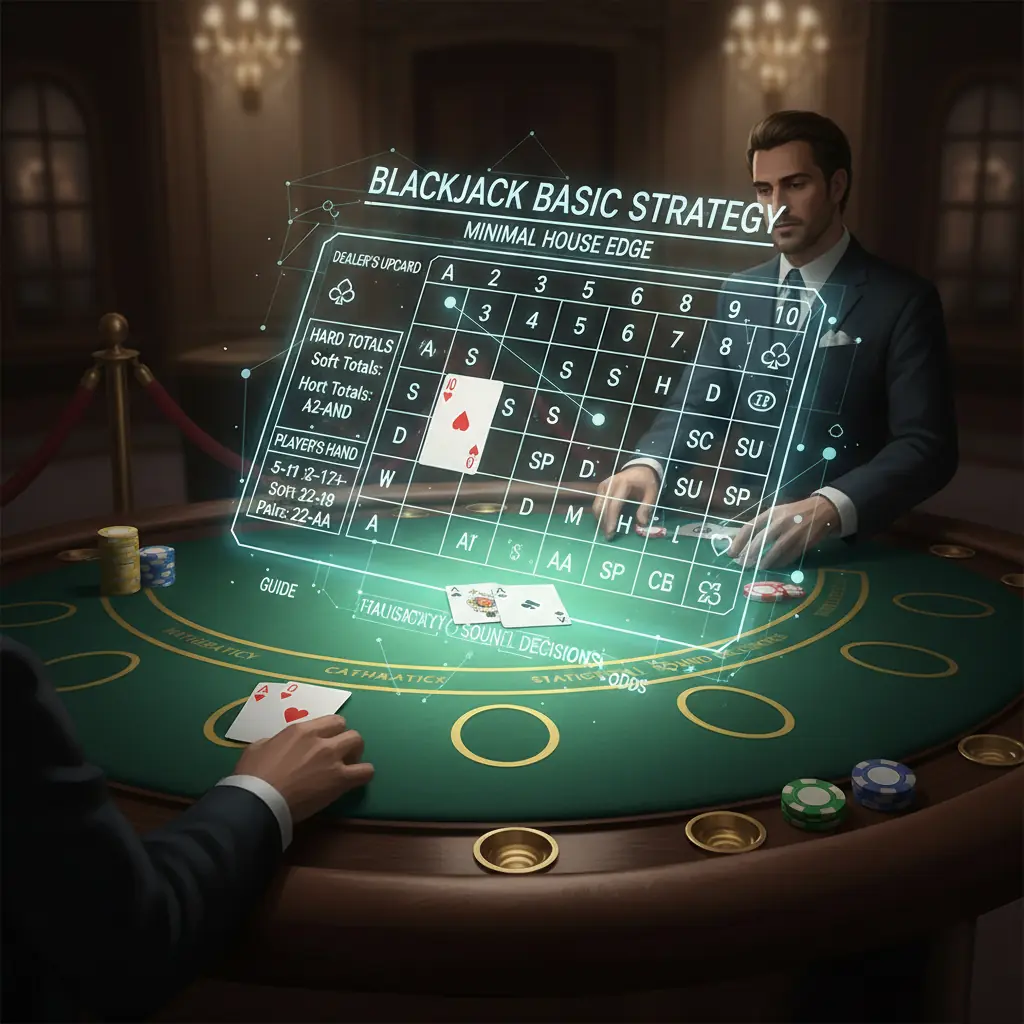
Blackjack isn’t a one-size-fits-all game. The optimal strategy shifts depending on the specific rules and the number of decks in play. Mastering the basic strategy chart is the first step to becoming a confident blackjack player. Understanding these nuances is crucial to minimizing the house edge and maximizing your potential winnings. Below, are strategy charts for single-deck, double-deck, and multi-deck blackjack. Notably, strategies adapt to variations like whether the dealer hits on a soft 17, each chart provides the mathematically-sound move for any given situation.
Single Deck Strategy Chart
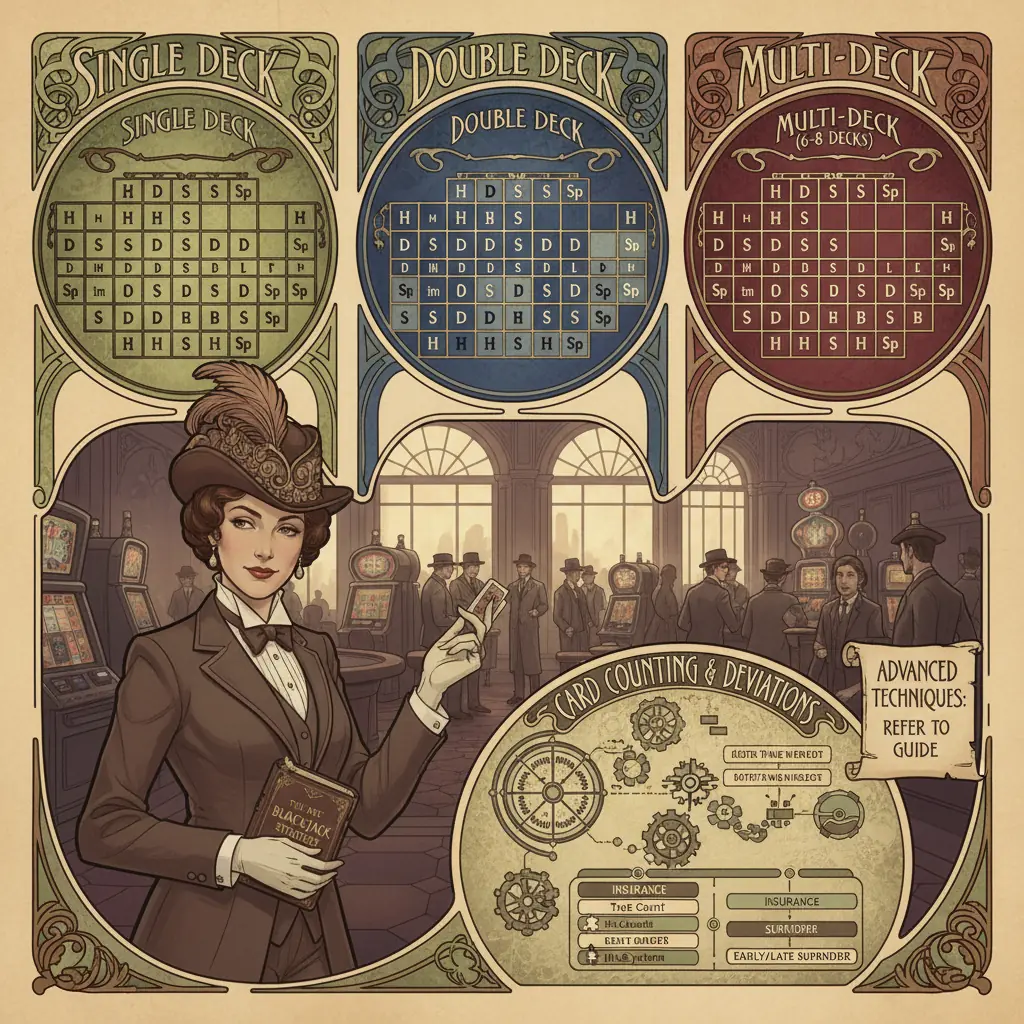
Single-deck blackjack typically offers the best odds, but requires a precise approach. With fewer cards in play, knowing when to hit, stand, double down, or split becomes essential. This chart provides a simplified strategy.
Find more complex single-deck charts online.
Double Deck Strategy Chart
Double-deck blackjack is another popular variation where strategy differs significantly from multi-deck games. Players need to adjust their decisions based on the altered card distribution. Here’s an easy to follow strategy chart.
More detailed double-deck strategy charts can be found online.
Multi-Deck Strategy Chart
Multi-deck blackjack reshuffles the odds, demanding another strategic recalibration. With more cards in play, the probabilities shift, making some plays more or less advantageous. Here’s a simplified chart to get you started.
Explore more comprehensive multi-deck strategy charts online.
Using Strategy Charts in a Live Casino Environment
Navigating the vibrant atmosphere of a live casino while trying to implement a blackjack strategy can feel like walking a tightrope. The key is to blend in, appear confident, and execute your strategy without drawing unwanted attention.
Mastering the Art of Discreet Play: Casinos are keen observers. Whipping out a large strategy chart is a surefire way to attract unwanted scrutiny. Instead, consider memorization as your primary tool. Start by focusing on the most common hand combinations and gradually expand your knowledge. Short on memory skills? A simple mnemonic can make all the difference.
Casino Etiquette is Paramount: Remember, you’re a guest in their house. Maintain a respectful demeanor. Avoid overtly celebrating wins or lamenting losses, which can attract attention. A calm, collected player raises fewer red flags.
Leveraging Technology (But With Caution): While physical charts might be frowned upon, technology offers alternatives. Some players subtly glance at their smartwatches or phones during breaks in the action. If you choose this route, ensure the device is used sparingly and subtly. Casino staff are trained to spot such behavior, so tread carefully. Mobile and online casinos offer a great way to study or have your preferred strategy card in other window when playing.
Balancing Strategy with Speed: Live casino games move quickly. Fumbling with a chart or taking too long to make a decision will disrupt the flow and annoy other players (and the dealer). Practice your strategy until it becomes second nature, allowing you to make quick, confident decisions.
Beyond Basic Strategy: Deviations and Advanced Techniques
While basic strategy provides a solid foundation for playing blackjack, skilled players can sometimes gain an edge by deviating from it. These deviations are typically based on information gleaned from techniques like card counting, where players attempt to track the ratio of high cards (tens, face cards, and aces) to low cards in the remaining deck or shoe. The idea is simple: when there’s a higher concentration of high cards, the odds shift in the player’s favor.
Why does this matter? Because a surplus of high cards increases the likelihood of the player getting a blackjack (paying 3:2) or the dealer busting. For instance, basic strategy might dictate hitting a 12 against a dealer’s 3. However, if the count indicates a significant excess of high cards, deviation charts may suggest standing instead, hoping the dealer will draw into a stiff hand and bust with one of those plentiful tens. Similarly, doubling down on 11 against a dealer’s 10 is generally a good move, but it becomes aneven better* move when the deck is rich in tens. Other advanced techniques like shuffle tracking can also influence optimal play decisions.
It’s crucial to understand that successfully deviating from basic strategy requires a strong grasp of probability, impeccable memory, and the ability to perform calculations quickly and accurately while under pressure. Card counting, in particular, is not a get-rich-quick scheme, but a complex skill that takes dedication and practice to master. Don’t expect to walk into a casino, count a few cards and start raking in cash. Casinos are aware of card counting techniques and will take measures to mitigate them when they detect them.
Bankroll Management and Responsible Gambling
Blackjack, like any form of gambling, demands a strategic approach to bankroll management and a steadfast commitment to responsible gaming. It’s not just about knowing when to hit or stand; it’s about understanding how to protect your resources and maintain a healthy relationship with the game.
Effective bankroll management starts with setting clear limits. Before you even place your first bet, decide on the total amount you’re willing to risk – your bankroll. Then, determine a suitable bet size. A common guideline is to wager only 1-2% of your bankroll on each hand. This approach helps to weather inevitable losing streaks and extends your playing time, increasing your chances of hitting a winning run.
Risk management is another crucial element. Implement stop-loss limits. If you reach a predetermined loss threshold, step away from the table. Chasing losses is a dangerous trap that can quickly deplete your funds and lead to reckless decisions. Remember, the odds in blackjack, while favorable with proper strategy, still involve an element of chance. There will be losing sessions.
It’s vital to recognize the signs of problem gambling. Are you frequently borrowing money to gamble? Are you neglecting responsibilities or relationships? Is blackjack causing you stress or anxiety? If you answer yes to any of these questions, it’s time to seek help. Many resources are available to provide support and guidance.
Ultimately, blackjack should be viewed as a form of entertainment, not a source of income. Treat it as an engaging pastime, and prioritize responsible habits to ensure that it remains a positive and enjoyable experience.
Common Mistakes to Avoid When Using Strategy Charts
Blackjack strategy charts are powerful tools, but they aren’t foolproof. A common blackjack mistake is grabbing the first chart you see without confirming it matches the specific game you’re playing. Different casinos, and even different tables within the same casino, can have subtly different rules that drastically alter the correct play.
Another frequent error involves misreading the chart itself. Players might glance too quickly and choose the wrong action, especially when tired or distracted. Simple inattention can turn a mathematically sound strategy into a losing proposition. It’s vital to double-check your decision, particularly on borderline hands.
Finally, many fail to account for rule variations. For example, a chart designed for a game with a 3:2 payout for blackjack is useless if the table only pays 6:5. This seemingly small difference significantly impacts the house edge and requires a completely different strategy. Always pay attention to detail.
Conclusion
Mastering blackjack involves understanding and applying strategy charts. These charts offer a clear guide to making informed decisions, enhancing your chances of winning. Consistent learning and practice are essential. With dedication, you can improve your blackjack skills. So, embrace the knowledge, stay disciplined, and elevate your game. Continuous practice and further learning will maximize your potential for success.